
The designing and making of hats and headpieces. Shape, trim, balance, and the occasional ambitious feather all matter. A good hat begins well before anyone puts it on.
The longer story
Millinery brings together material, shape, balance, and the relationship between a hat and its wearer. A hat is not simply a small sculpture placed above the face. It has an inside as well as an outside, and its weight, attachment, and proportions affect how it can be worn. The invisible decisions often determine whether the visible ones succeed.
A crown covers or rises above the head; a brim extends outward. Trimming adds another layer of design, but it does not explain the underlying structure. Blocking shapes suitable material over a form, while other construction methods build a hat from pieces. Felt, straw-based materials, fabric, and supporting components offer different possibilities. One method cannot stand in for the entire craft.
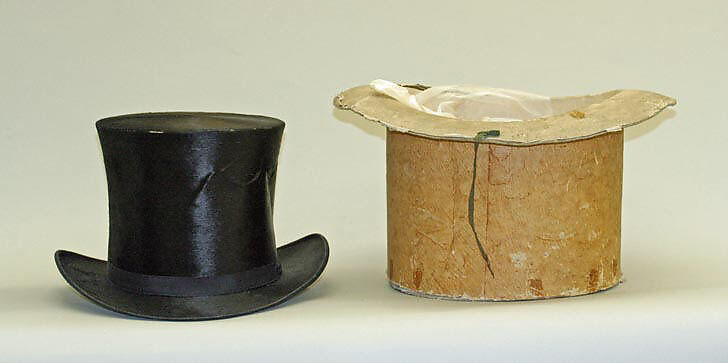
Heritage Crafts distinguishes millinery from related areas such as hat making and hat-block making. The boundaries have their own histories, so a museum label deserves to be read rather than replaced with a convenient modern assumption. The Metropolitan Museum of Art, for example, catalogues an American or European hat dated about 1828 without specifying a medium. That absence is a reason for restraint, not an invitation to identify its material from colour.
At the festival
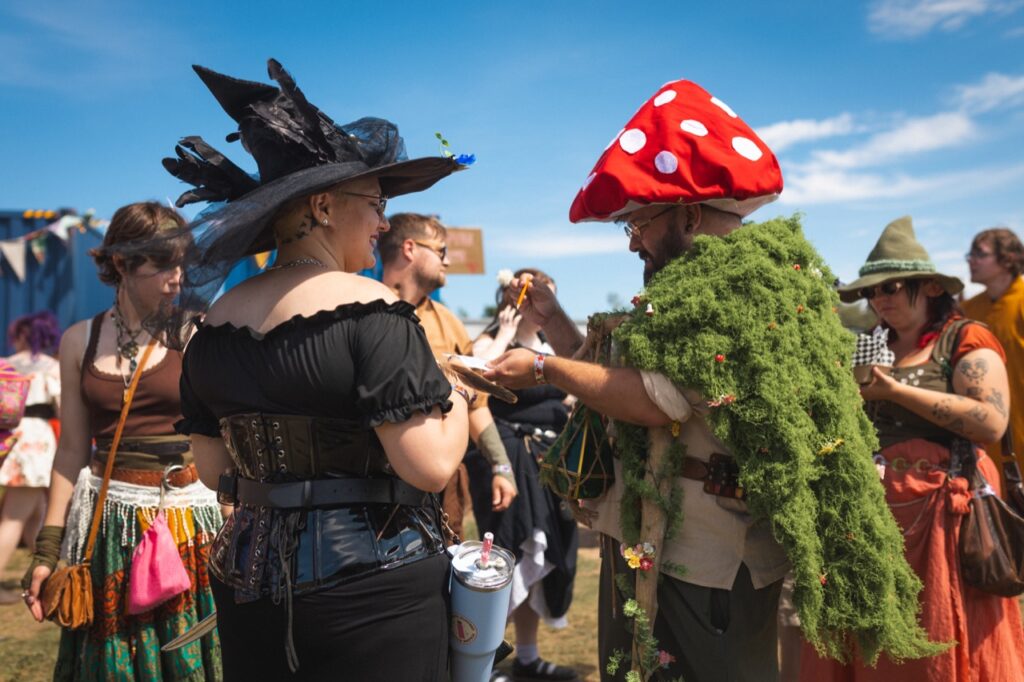
When considering a festival hat, look at the complete silhouette and then at its practical scale. A broad brim changes the space around a person; a tall crown changes their outline. Imagine sitting, turning, and speaking with someone nearby. This is design thinking, not a demand that every hat be modest. A grand entrance still needs somewhere to put its head.
On the page
The Met’s hat record supplies a date, cultural attribution, accession number, and provenance credit. Those details make it a useful reference even when the material field remains incomplete. A catalogue is evidence with stated limits. Use its photograph to discuss the object’s visible form, not to invent an unseen construction sequence.
On screen and in play
In a hypothetical stage design, a recurring hat shape could help an audience recognise a character before the actor speaks. A close-up would place greater emphasis on texture and finishing. Neither use proves that the shape was worn by everyone in a particular century. Costume storytelling and historical documentation can inform one another without becoming interchangeable.
Related words Felting · Haberdashery · Garb · Bonnet · Embroidery
